Jerk Dip and Drive
Simple drill for working on balance and a strong leg drive in the jerk. Start with the bar in the front rack position. Keep the elbows slightly lower than you w…
Simple drill for working on balance and a strong leg drive in the jerk. Start with the bar in the front rack position. Keep the elbows slightly lower than you w…
Great exercise for building confidence and speed getting under the bar. Start with the bar on your back with a snatch grip and your elbows pointing toward the g…
Great drill for working on speed under the bar and an aggressive turnover. Start from a standing position with your clean grip on the bar. Keep pressure through…
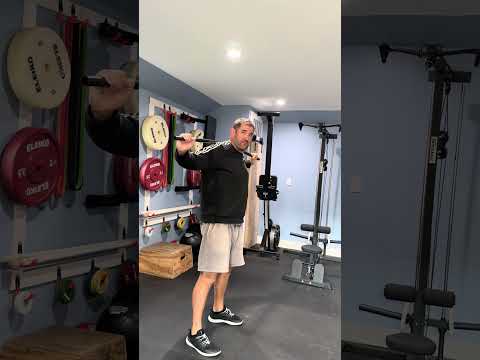
Start with the bar resting on your traps. Take a grip wide enough that your elbows point toward the ground. Your index fingers and thumbs can point toward the c…
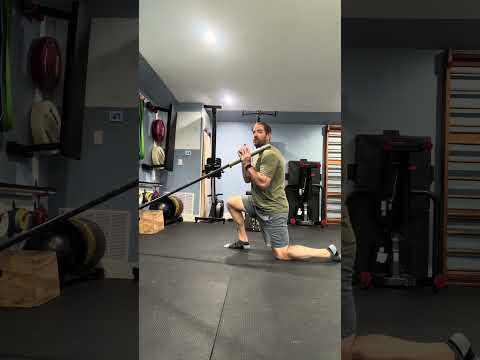
Great pressing variation for working the shoulders while also getting some trunk and hip stability. Start in a half-kneeling position with both legs around 90 d…
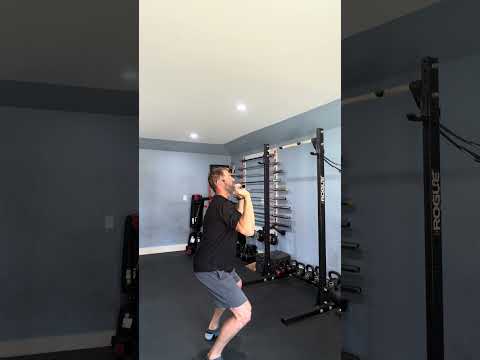
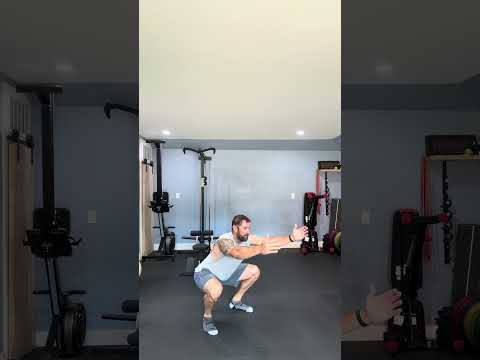
Simple squat variation using a kettlebell or dumbbell. Hold the weight with both hands around sternum height. Start with your feet around shoulder width apart. …
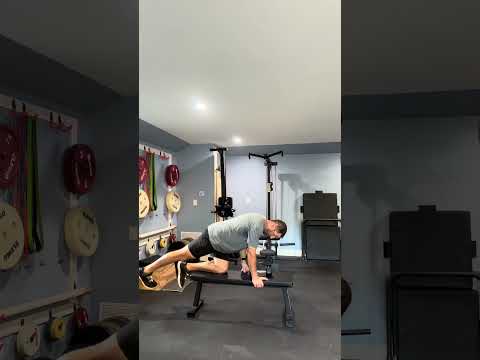
You’ll need a bench and a kettlebell or dumbbell. This is a great exercise for working anti-rotation while also getting some good upper-back and scapular work. …
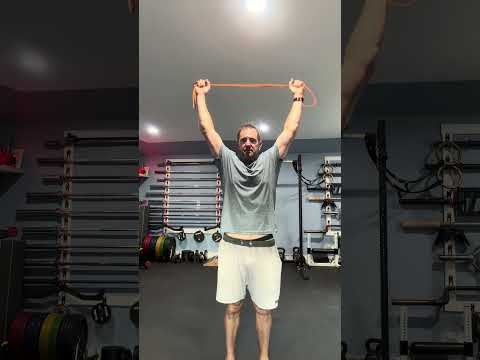
Simple tricep and elbow work. The video does most of the explaining here. Wrap a band around a pull-up bar. Grab the band wherever you need to get the right amo…
Great exercise for working single-leg control, hip mobility, and rotation. In this example, I’m using a band with the arms straight out in front. Start with you…
We’re starting with the assumption that you already know your snatch or overhead squat grip. Start with your feet around hip width. You can go slightly wider if…
Intent in the work being done is often as important as the work getting done. There’s a reason you need to check your ego at the door. Every day can present its…
I had a client dealing with some calf and Achilles issues while training for a marathon. After looking at what he was doing, one thing we decided could improve …
Sit on a bench with one foot up on the bench and the other foot on the floor. Point the toes of the elevated foot down the length of the bench. Place the elbow …
Set up like you would for a normal back squat. This time, use a box to control the depth. Choose a box height that stops you around parallel. Turn the box sligh…
Start with a normal ring row setup. Take a couple steps back. You do not need to make this one too difficult. Pull the rings toward the face with the elbows hig…
Press the bottoms of the feet into the wall and stay on the toes. Walk the hands in close to the feet. Set the shoulders. Lean forward as you lower, going only …
Set the rings at a height where the arms are fully extended and the feet are just off the ground. Take a full grip across the palm. Start in a strong support po…
Start with the hands around shoulder width. Keep the legs together and the body controlled. Turn the elbows slightly in. Then pull the elbows down toward the ba…
Start with a fairly thick band looped over the pull-up bar. Place one foot in the band. Take a grip around shoulder width. Rotate the elbows slightly forward to…
Start with the feet about hip-width apart. Take your snatch grip with the bar resting at the hip. Hinge forward and keep pressure through the middle of the foot…
Start in a lunge position with the band attached perpendicular to the front leg. Rotate into the front hip. Return to center. Then press the band straight out i…
Start with the feet about hip-width apart and the bar over the middle of the foot. Hinge at the hips and take a grip around shoulder width. Keep the back flat. …
The lat pulldown is one of my favorite machines for building the lats, upper back, and pulling strength. It is a staple exercise in a well-rounded program. Star…
This is a good exercise for warm-ups or cool-downs. It works well for shoulder mobility, upper back position, and getting the shoulders ready to move. Use a thi…
This is a good shoulder accessory exercise to use as a warm-up or at the end of a workout. Start standing with a dumbbell in each hand. Raise the dumbbells in f…
This is quickly becoming one of my favorite go-to back exercises. You need two objects: one to support yourself with and one to row. Start with a wide stance. H…
The push press is a great way to build overhead strength, leg drive, and explosiveness. Start with the hands around shoulder width. Feet just outside the hips. …
This is a good upper back and shoulder exercise, especially if you need more pulling work to balance out pressing. Attach one band to a rack or post. Loop a sec…
This is a simple warm-up drill for the squat, hamstrings, upper back, and positions. Start in the bottom of a squat. Reach toward your toes as you straighten th…
This can be used as an accessory movement or a main lift in a well-rounded program. It works well for single-arm strength, overhead control, trunk stability, an…
One of my go-to exercises for lower-ab focus, compression work, and learning how to control the low back. The key is keeping control of the pelvis and not letti…
Doesn’t get much more fundamental than a push-up. Good for all ages, all strength levels, and easy to scale depending on where you are. Start with the hands jus…
The split jerk is one of the Olympic lifts and one of the best ways to build power, timing, and coordination. Start with the bar in the front rack position. Fee…
If you want a solid upper back exercise, this is a good one. The inverted row works the lats, upper back, and pulling strength. I like it for posture, shoulder …
This is one of the best basic core exercises. The goal is not to just move your arms and legs around. The goal is to learn how to keep your ribs down, control y…
Hamstring mobility matters for hinging, squatting, lifting, and general movement quality. This is a simple way to work on it without much equipment. Do: 2 sets …
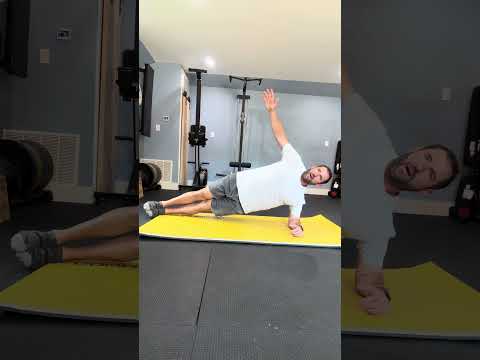
The side plank with reach is a good exercise for core control, low back stability, and controlled rotation. Set up on your side with your elbow underneath your …
This is a simple post-golf reset I like to use after a round. Perfect for anyone who gets stiff after golf and wants to feel a little better the next day or bef…
The snatch is one of the best full body exercises you can learn. It uses mobility, strength, speed, coordination, and timing all at once. A true bang-for-your-b…
The single leg RDL is one of my favorite exercises for single leg balance, hip control, and hinge pattern work. The setup is simple, and you do not need much eq…
This is a simple warm up I like to use before lifting. The goal is not to make the warm up the workout. The goal is to: get blood flow going move through basic …
Good morning is one of my go to exercises for improving glute strength and teaching a better hinge pattern. A lot of people struggle to hinge correctly without …
The wall squat is one of my favorite exercises for both assessment and warm up work. Sometimes people don’t realize how much compensation they use during a squa…
This is a good pull-up variation for someone struggling with pulling mechanics or trying to add some lower resistance L-sit positional work. The feet support le…
Foot pressure is probably the most overlooked part of the power clean. Most people think about: \- hips \- extension \- pulling under But if your pressure is of…
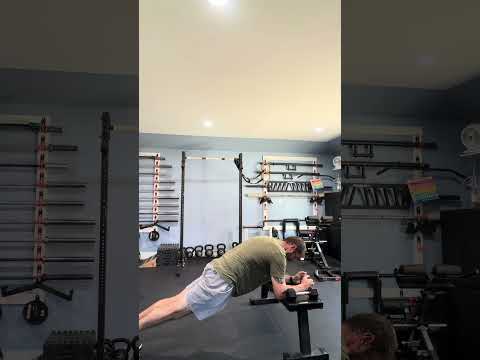
This is one of my go-to exercises. Plank with a single arm row combines lat work with anti-rotation. Main thing here is not letting your hips move. Simple movem…
If you’re trying to get better control of your pelvis, this is a good one to add in. This is just a banded version of bringing your knee up to about 90°, but no…