#Movement 3 posts
Good Morning
Good morning is one of my go to exercises for improving glute strength and teaching a better hinge pattern.
A lot of people struggle to hinge correctly without rounding the back or shifting pressure too far into the toes. This is one of the simplest ways to teach the hips how to load properly while staying in a strong position.
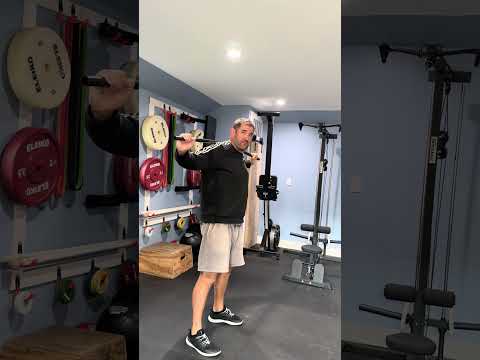
The bar or PVC starts on the shoulders, not the neck. Elbows slightly up to help lock the upper back in place. Feet about hip width apart with the toes turned slightly out.
To start the movement, hinge at the hips first. Butt goes back, torso tilts forward, and the knees bend slightly. Keep pressure through the middle of the foot and maintain a flat back throughout the movement.
Lower until you feel tension in the hamstrings while still maintaining position. Then stand back up by driving the hips forward.
This can be used:
- As a warm up before squatting or pulling
- As accessory work for glutes, hamstrings, and low back
- To improve bracing and hinging mechanics
Typical use:
- Warm up: 1–2 sets of 5–8 reps
- Accessory work: 2–4 sets of 6–10 reps
This is one of my favorite exercises for teaching people how to move better under load without overcomplicating things.
Wall Squat
The wall squat is one of my favorite exercises for both assessment and warm up work.
Sometimes people don’t realize how much compensation they use during a squat until you take away the ability to lean forward. The wall gives immediate feedback and forces you to work on control, balance, and positioning.
All you need is a wall and a willingness to put yourself into a difficult position.
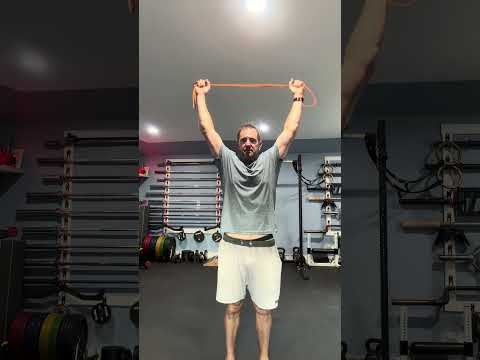
Stand facing the wall with the feet about shoulder width apart. Hands can stay overhead or in front depending on mobility and control. From there, squat down slowly while trying to maintain balance and position without falling backwards or driving into the wall.
The goal is not to force depth at all costs. The goal is to improve control and awareness of position throughout the movement.
This is a great exercise before:
- Squatting
- Olympic lifting
- Lower body workouts
- Movement prep sessions
It can also be used after training as a light positional stretch or movement reset.
Typical use:
- 2–3 sets
- 2–5 controlled reps
This exercise gives immediate feedback on:
- ankle mobility
- hip control
- torso position
- balance
- squat mechanics
Sometimes the most frustrating positions are the ones that expose exactly what needs improvement.
This is a simple warm up I like to use before lifting.
The goal is not to make the warm up the workout.
The goal is to:
I like this before squatting, Olympic lifting, or general strength work.
Run through it at a steady pace. Nothing should feel forced.
Use it as a starting point and adjust based on what your body needs that day.